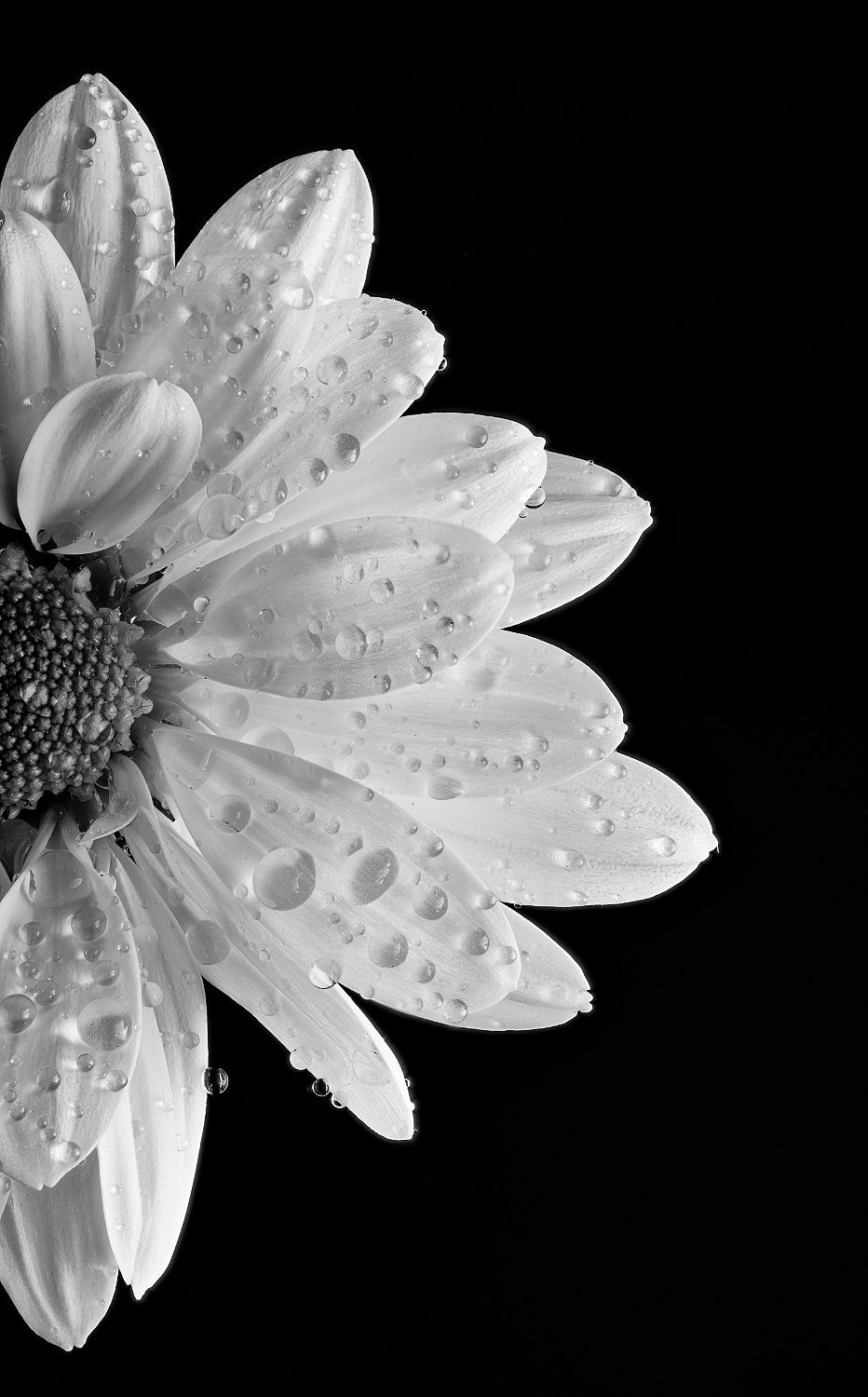
Water Drop Daisy

One aspect of photography that I particularly enjoy is working in the studio. Like many photographers, I began by relying on natural, available light before transitioning to a compact fluorescent lighting kit—the corkscrew-style bulbs that were common before the widespread use of modern LED panels. While these fluorescent lights performed adequately, they offered limited output and often resulted in motion blur when subjects were not completely still.
An assignment for a magazine to photograph a local Boys and Girls Club became a turning point in my approach to lighting. The organization was operating out of an old church while awaiting the construction of a new facility, and to describe the interior as dim would be an understatement. Recognizing an opportunity to expand my skill set, I decided it was time to learn off-camera flash. With guidance from a local retired photographer, I quickly grasped the fundamentals and began creating the types of images I had long envisioned.
My appreciation for studio work is also influenced by my experiences with climate. Growing up in upstate New York, harsh winters often kept us indoors, where venturing outside in subzero temperatures was far from appealing. Now, living in Florida, I find myself indoors during the peak of summer when temperatures soar. Photography, however, doesn’t need to pause for the weather—this is where tabletop work becomes especially rewarding.
I’ve dedicated a small section of my living room to a simple studio setup with a table, light stands, and a few flashes. I currently use the Godox system, favoring the compact TT600 speedlights for close-up work. These units are reliable, affordable, and powered by AA batteries, with the option of external battery packs for extended shooting sessions. For softer light, I often attach a small 4”x6” softbox directly to the flash head.
For this particular image, I purchased inexpensive flowers from a local grocery store and selected a single daisy as my subject. Using a “helping hands” clamp, I secured the flower in place. I envisioned a composition split down the middle, allowing the background to fall into complete black. By controlling the flash output, it’s possible to effectively eliminate ambient light, even in a naturally lit room.
The camera was mounted on a tripod and paired with a Nikon Z 105mm macro lens—a lens I value for its exceptional sharpness and portability. I also used a Godox wireless trigger to control the flash remotely. Positioning the flash to camera right and as close to the subject as possible (without entering the frame), I set the camera to ISO 100, f/8, and 1/200 second—the camera’s sync speed. The flash output was dialed to approximately 1/4 power. The initial results were strong, but something still felt incomplete.
Searching for a final element to enhance the image, I found a simple spray bottle, filled it with water, and lightly misted the flower. The effect was immediate and striking. The water droplets introduced texture, depth, and a sense of atmosphere—some droplets even clinging delicately to the petals, suggesting the aftermath of rainfall. Combined with the controlled lighting and black background, the result took on a refined, fine art quality. It was a reminder that compelling images often come from simple tools used thoughtfully. Now anyone can create a water drop daisy.
If you haven’t yet explored flash photography, I encourage you to do so. Today’s tools are more accessible and affordable than ever. Starting with a single flash and a wireless trigger is often all that’s needed to begin. For those interested in learning more, I’ve also been involved in a four-week course on lighting and off-camera flash with the Charlotte Shutterbugs Photography Group. If you’re in Southwest Florida, I invite you to stop by and visit.
Keep your glass clean,
Spencer


Comments