My Photography Gear
I've had many inquiries on what equipment I used to create my photos. Here I list everything I use. I'm not affiliated with any company. I recommend these products as I've used them for years and spent my own money on these items. I buy all my gear from B&H in New York City unless noted. If you have any further questions, feel free to get in contact with me.
The Camera:
-
Nikon Z6: Since I have been in the Nikon family since I have started, I've stayed with it. I've been happy with the image quality and features. These days, all I use are manual mode, single point autofocus and focus stacking on occasion.
The Lenses:
-
Nikon NIKKOR Z 28-400mm f/4-8 VR: This is my main workhorse. I love this lens. It’s very versatile and allows me to get the composition of the scene I’m working. It’s also much lighter than other lenses.
-
Nikon NIKKOR Z 14-30mm f/4 S Lens: For really tight locations, I love this lens. It has a flat front so it can accept filters. Weighing in at one pound, this is a great option for hiking to get those grand vistas.
-
Nikon NIKKOR Z 50mm f/1.8 S Lens: Known as the “nifty fifty”. I’ve always had a 50mm on hand since it gives me the same field of view as my eye. Also, this is an f/1.8 aperture which allows me to hand hold at night or really smooth out the background and isolate the subject. (NOTE: The f/1.8 is in Nikon’s “S” line where the f/1.4 is not.)
-
Nikon NIKKOR Z MC 105mm f/2.8 VR S Macro Lens: I love photographing macro subjects. This is another lens that I’ve always had. Being a prime, it’s razor sharp and can be used to take portraits at f/2.8 as well.
The Filters:
-
NiSi JetMag Pro 82MAG Landscape ND Magnetic Filter Kit: I’ve used singular filters for years for my polarization and neutral density needs. However, I wanted something that was more compact and flexible. I chose this particular filters set as they are magnetic and they LOCK together. They come in a nice case with various step down rings. I can use this one system for all my lenses.
The Hardware/Software:
-
Apple 16” MacBook Pro (2014): It’s hard to believe that my MacBook is still going after all these years. That is why I stick with Apple products. I get longevity out of them. Goes to show that you don’t need the latest and greatest to accomplish your photography goals.
-
SanDisk 128GB Extreme PRO CFexpress Type B Memory Card: The Nikon Z6 takes these types of cards. I really like them as they are bigger and faster than SD cards. Not that I shoot continuous that much, but nice to have it when needed. Also, transferring the files to the computer is much faster.
-
DXO PhotoLab (Version 6): I’ve been using DXO’s PhotoLab for many years now and I’ve never looked back. It’s not a subscription and makes my RAW files look even better! They built the camera and lens profiles for companies, so why not use them? I HIGHLY recommend using this piece of software.
-
NIK (Version 6): I started using NIK software about 20 years ago. It has really speeded up my workflow and I use NIK Silver Efex Pro for all my black and white conversions. DXO now owns NIK and if you purchase both, they are incorporated in PhotoLab.
-
Affinity (Photo/Pixel): I used to use Photoshop and Lightroom. Once Adobe started charging for subscription, I left. I now use Affinity and it even runs on my old MacBook! For cloning and painting backgrounds, it works great, and it’s even FREE!
-
SanDisk 2TB Extreme Portable SSD: I don’t leave any photos on my computer as to not slow it down. I have come up with a system that I used to use in the printing industry. I have three of these. The first one is called “Photos”. The second one is called “Photos Backup” and the third one I use for Apple’s Time Machine. This system has worked great for me over the past 30 years.
-
Photomatix Pro (Version 7): Photomatix and I go way back. The reason why I use Photomatix Pro over other HDR merging software is that it has the “exposure fusion” feature where it keeps my photos looking like when I was there and not looking like the end of days.
-
Zerene Stacker (Version 1.04): I enjoy extreme macro photography, and this usually requires focus stacking. Affinity offers focus stacking but Zerene takes it a step further. Also, the software runs my macro rail system, see below.
-
Smart Shooter (Version 4, from TetherTools): I use this when I’m photographing in the studio or when I’m teaching. This allows everyone in the room to see how the photo is coming along. I also use this with the cable from TetherTools.
The Studio:
-
Godox TT600 Thinklite Flash: Once my old Nikon flashes started dying, I switched to Godox. These have worked great and I highly recommend them. This flash takes four AA batteries. They also make a version that uses their proprietary battery system. I like these flashes so well I bought five of them!
-
Godox DP1000III-V Professional Studio Flash with LED Modeling Lamp: For really big projects, I use these. 1000 ws allows me to generate enough light to do pretty much anything I want.
-
Godox XProC TTL Wireless Flash Trigger: This is what I use to trigger the Godox flashes wirelessly. I’ve been this system for years and it’s been solid. I find the screen easy to read and navigate with the buttons.
-
Godox Umbrella-Style Softbox with Bowens Mount (35.4 x 47.2”): For really big projects, I use this soft box. Opens in a flash and collapses down and doesn’t take up much room. It has the Bowens mount and fits the strobe and the S2 kit from Godox for the speed lights.
-
Godox Umbrella-Style Softbox with Bowens Mount (11.8 x 35.4”): Same as the soft box listed above, but in a strip configuration.
-
Godox S2 Speedlite Bracket with Softbox, Grid & Carrying Bag Kit (23.6 x 23.6”): I use this for when I’m on the go and want something easy to carry. The box opens quickly and the speed ring pressure fits in the box so no tools necessary on site. Also, this allows any type of speed light to be used. The bracket on the outside is made for Bowens so it can be used with any of their modifiers.
-
Godox S2 Speedlite Bracket with Softbox, Grid & Carrying Bag Kit (31.5 x 31.5”): Same as the listing above, only the soft box is bigger.
-
Impact White Translucent Umbrella (43”): If I need some quick diffusion, I use these umbrellas. They are light, portable and cheap. If they get damages while I’m working outdoors, they are easily replaced.
-
Impact Heavy-Duty Air-Cushioned Light Stand (Black, 9.5’): I have a few of these. They are sturdy enough to hold my heavy strobes with modifiers.
Support/Grip Gear:
-
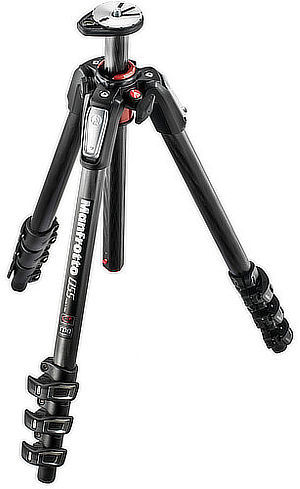
Manfrotto 055XPROB Aluminum Tripod: I have a couple of these. I’ve had these for years and have never let me down. They are a bit heavier than other options, but if you are doing long exposures or using a focusing rail, they are sturdy.
-
Manfrotto 290 Aluminum Tripod: Now that I’ve gone mirrorless, this is my go to when I’m hiking. It’s smaller than the 055XPROB and most of the time gets the job done.
-
Manfrotto 3030 Tripod Head (eBay): I used ball heads for many years. Over time the locking mechanism has broken so I went back to my original tripod head. This is a three way head that allows you to adjust each axis independently. If you are photographing macro and need to move the camera “just a bit” one direction without disrupting the entire composition, check this out. It’s all metal and built to last several lifetimes. Since they are out of production, you can get them fairly cheap on eBay.
-
Impact C-Stand with Turtle Base and Grip Arm Kit: There are times when I need to put a flash in an awkward position. This allows me to position it wherever is needed.
Speciality Equipment:
-
Stopshot Studio Water Drop Photography Kit (from Cognisys): Once I saw some water drop photography, I was hooked. I tried using some cheap alternatives but soon found our you need a computerized system if you want to capture collisions. I’ve used this system for years and works great. It’s also expandable if you really want to get some neat compositions.
-
Stackshot Extended Macro Rail Kit (from Cognisys): Another genre of photography that I enjoy is macro and extreme macro. At higher magnifications, you need to focus stack to ensure that your subject will all be in focus. This computerized rail automates the process. Also, Zerene Stacker has built in software to run the rail from your computer instead of using the provided box, makes it much easier.
-
Nikon PB-6 Bellows (eBay): For extreme macro work, this allows me to move the lens away from the focal plane to increase magnification. They don’t make these anymore, but you can find them on eBay. This is what I place on the macro rail kit above as part of the extreme macro kit.
Other Stuff:
-
Nikon MC-DC2 Remote Release Cord: Living in Florida, I’ve had issues with the wireless camera triggers. Once I switched to the corded option, all that went away. This also has a lock on the trigger button if you are going to be doing long exposures. It weighs nothing and fits in the bag nicely.
-
Lowepro Pro Trekker BP 350 AW II Backpack: To carry everything, I use this backpack. I’ve been happy with it as it holds all my lenses, a speed light, tripod, camera, filters and accessories. It’s comfortable even after a full day of photography.
-
UES Full Frame Camera Sensor Cleaning Kit (from Amazon): When I got my Nikon D300 I was scared of trying to clean the sensor myself. I sent it away to Nikon and $100 and four weeks later it returned, pristine. When I got my Nikon Z6, I decided to try and clean it myself. There isn’t a mirror box to get in the way, I found it’s easy to clean. **I’m not telling you to clean your camera yourself. Do what you are comfortable with. I don’t take any responsibility for what may happen if you do decide to clean your camera yourself.